
Study in Slovakia: Universities, Costs, the Preparatory Year and the Visa
A practical guide to studying in Slovakia: universities and fees from the Ebt3ath catalog, a calculated living budget, the preparatory year, visa and residence, and the role of the Ebt3ath team based in Bratislava versus applying alone.
Are you looking for a degree with low tuition, a program taught in English, or a preparatory year that opens the path to studying in Slovak? The answer depends on the university, the program language and the mode of study. In this guide we separate tuition fees from living costs and application services, explain the visa and residence options without promising guaranteed admission or a guaranteed visa, and show what the Ebt3ath team - physically based in Bratislava - actually does, and why many students choose to apply with it instead of applying alone.
Sources last reviewed: 16 November 2026. Program prices are taken from the Ebt3ath catalog at review time, with an explicit note whenever they differ from the university's official page. Some fees are for 2026/2027 and others for 2027/2028; do not assume they apply to every intake.
Is studying in Slovakia really free?
Yes, tuition can be zero - but not simply because you finished a preparatory year. The rule stated by the Slovak Ministry of Education and the Study in Slovakia portal is that full-time study in the Slovak language at public or state universities carries no tuition fee when you stay within the standard length of study and meet the exemption conditions. Nationality alone is not a reason to charge fees. Fees can arise when you exceed the standard duration or study parallel programs at the same level. [1][2]
Programs taught in English or another foreign language have fees set by the university or faculty, and some are free as well. Private universities and external/part-time study do not automatically fall under the free-study rule. So it is wrong to promise a student that "study after the preparatory year is 100% free" without naming the program and its conditions.
Track | What do you pay? | The key condition to verify |
|---|---|---|
Slovak-language program, full-time, public or state university | Tuition can be zero | Admission and language conditions, standard duration, and any previous or parallel study |
English-language program | Fees depend on the program; some are free | The official price for the specific intake |
Language or academic preparatory year | Separate fees, independent of the degree | Hours, target level and included subjects |
Private university or external/part-time study | Do not assume it is free | The university's regulations and the mode of study |
"Free" here means tuition only; it does not include housing, living costs, insurance, translation, legalizations, travel or service fees. [1][2]
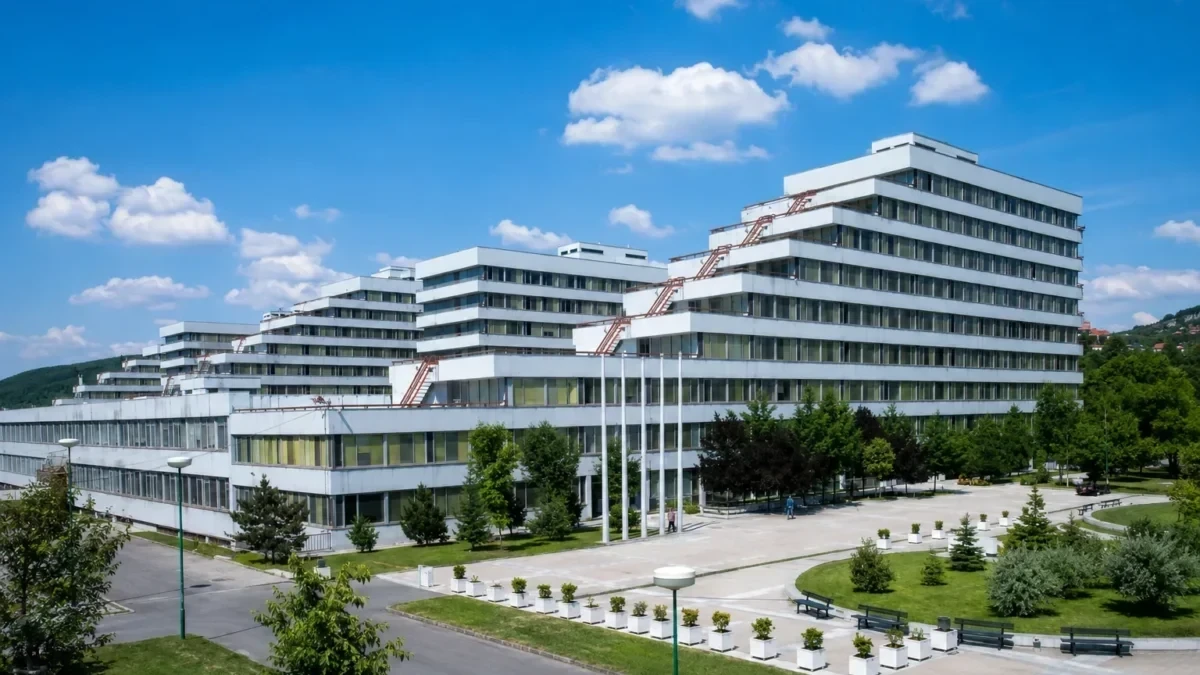
Which universities and majors can you study in Slovakia?
Start with the major and the language of study, then compare universities and cities. The map below shows examples of universities and programs listed in the Ebt3ath catalog; it is not a ranking of universities or an exhaustive list of every program in the country. A major existing at a university does not mean it is available in every language or at every level. [3]
University | City | Examples of fields and programs in the catalog |
|---|---|---|
University of Economics in Bratislava (EUBA) | Bratislava | Finance, banking and insurance, business administration, marketing, international business |
Slovak University of Technology (STU) | Bratislava | Computer science, artificial intelligence, mechanical, electrical and chemical engineering |
Comenius University | Bratislava, with a medical faculty in Martin | Medicine, dentistry and pharmacy, management, mathematics and sciences |
Slovak Medical University (SZU) | Bratislava | General medicine |
Technical University of Košice (TUKE) | Košice | Engineering, aviation, air transport management, economics |
Pavol Jozef Šafárik University (UPJŠ) | Košice | Medicine and dentistry, sciences, data science and artificial intelligence |
University of Veterinary Medicine and Pharmacy (UVLF) | Košice | Veterinary medicine and research programs related to animal health |
University of Žilina (UNIZA) | Žilina | Air transport, informatics, management, engineering |
Matej Bel University (UMB) | Banská Bystrica | Economics, management, finance, tourism and languages |
Slovak University of Agriculture (SPU) | Nitra | Agriculture, agricultural marketing, information systems and management in production engineering |
Technical University in Zvolen | Zvolen | Forestry, wood sciences and forest farming |
University of Ss. Cyril and Methodius (UCM) | Trnava | Biotechnology, languages and communication |
University of Prešov | Prešov | Management and other programs by level and language |
Paneuropean University | Bratislava | Applied informatics, international business administration, international relations and diplomacy |
VŠM / City University of Seattle | Bratislava | Business administration BSBA and the dual Mgr./MBA program |
Bratislava International School of Liberal Arts (BISLA) | Bratislava | Political science, international relations and philosophy within the liberal arts |
Academy of Fine Arts and Design | Bratislava | Architecture, digital arts, photography and design |
Academy of Performing Arts | Bratislava | Performance and music creation |
Constantine the Philosopher University (UKF) | Nitra | English language, business communication and languages |
University of Trnava | Trnava | Environmental systems sciences, English and Anglophone cultures |
Catholic University | Ružomberok | English and American studies, philosophy and history |
Institute of Technology and Business | Prešov | Economics, business administration and business ethics |
How do you choose the right program?
Decide the level: bachelor's, master's, PhD, or an integrated medical program.
Choose the language of study whose requirements you can actually meet, not just the cheapest option.
Check the attendance mode: full-time or part-time, on-site, blended or distance. Do not build a study-residence plan on a program merely existing in the catalog; residence eligibility has separate conditions. [10]
Review the prior-education requirements, recognition of your certificate, language requirements, and any entrance exam or interview. Requirements are set by the program and the faculty. [2]
Compare annual tuition and the city's living and housing costs, then confirm the application deadline for the intake you want.
If your profession is regulated, such as medicine or dentistry, check the licensing and recognition authority in the country where you intend to work before paying any fees. Do not assume studying in an EU country means automatic recognition everywhere.
How much are university fees according to the Ebt3ath catalog?
The figures below are annual fees displayed in the catalog when this guide was prepared; they are not national averages or final prices for every admission year. The level ranges include full-time and part-time programs; programs that display no numeric price were not treated as free. The meaning of "up to" was preserved wherever a price appears as an upper limit. [3]
Level | Displayed range for paid programs | Examples of free programs or variance |
|---|---|---|
Bachelor's | 1,000 to 8,500 EUR per year | Free programs exist; the lowest price in the survey is a part-time English language and communication program at UCM |
Master's | 1,000 to 7,000 EUR per year | Free programs exist in the catalog, including Finance in English at EUBA |
PhD | 600 to 10,500 EUR per year | Fees vary by language, university and mode of study; a fee alone should not be read as a scholarship or funding |
Integrated medical programs | Varies by specialization, faculty and entry year | No single price applies; some data needs updating as explained below |
These are survey bounds of the catalog, not a promise that the right program for you sits at the lower bound or that everything in the catalog applies to your situation. [3]
Specific examples of fees and majors
Program and university | Level and language | Displayed annual fee |
|---|---|---|
Computer Science at STU | Bachelor's in English | 4,000 EUR |
Business Management and Economics at UMB | Bachelor's in English, blended format | 2,000 EUR |
Enterprise Economics and Management at the University of Žilina | Bachelor's in English | 3,500 EUR |
Biotechnology at UCM | Master's in English, full-time | 1,000 EUR |
Finance at EUBA | Master's in English, full-time | No tuition fee, per the catalog |
Artificial Intelligence, double-degree program at STU | Master's in English | 7,000 EUR |
Analytical Chemistry at STU | PhD in English, full-time | 600 EUR |
Finance at EUBA | PhD in English | 3,000 EUR |
Epidemiology at UPJŠ | PhD in English, part-time | 10,500 EUR |
General Medicine at SZU | Integrated medical program in English | 10,000 EUR |
Veterinary Medicine at UVLF | Integrated program in English | 8,950 EUR |
Source: program pages and cards in the Ebt3ath catalog. The final price is fixed by the program offer or the university's fee schedule for the requested intake before payment. [3]
Important note on Comenius medicine and dentistry fees
There are differences between some catalog cards and the faculty's official announcement. For the 2027/2028 cycle, the Faculty of Medicine of Comenius University in Bratislava announces general medicine at 13,500 EUR per year for a standard duration of 6 years, and dentistry at 15,900 EUR per year for 5 years. So do not rely on an old price or a generic 6-year classification for dentistry. When they differ, the faculty's announcement for the requested cycle prevails and the catalog should be updated against it. [9]
Browse the programs and compare language, fees and deadlines.
What is the preparatory year, and how much does it cost?
The preparatory year is not one standard program. It can be training in Slovak only, or language plus academic subjects linked to your major. The goal is reaching a level that lets you apply and study, not automatically getting a seat in any faculty. [5][6]
You can use 3,500-5,000 EUR as an initial planning allowance for the preparatory year, but it is not an official national minimum and maximum, and it does not mean everything in between covers housing, books or application fees. The official examples are clearer than the general range:
Provider and program | What does it include? | Published fees |
|---|---|---|
EUBA, language and academic preparation 2026/2027 | 610 lessons, language and academic preparation for economics and social sciences, targeting B2.1 | 3,490 EUR + 50 EUR for the language exam and certificate, i.e. 3,540 EUR |
STU, Slovak A1-B2 | 1,000 teaching hours/lessons per the program description | 4,000 EUR + 150 EUR registration, i.e. 4,150 EUR; books and additional specialized materials not included |
STU, Slovak A1-B1 | 640 teaching hours/lessons per the program description | 2,560 EUR + 150 EUR registration, i.e. 2,710 EUR; not equivalent to the B2 track |
Sources: EUBA and STU. The EUBA example is for a course that already started in October 2026; it is not an announcement that registration is still open, and the next course's fees and dates need confirmation. The STU page shows program prices, and their validity for the application intake must be confirmed. [5][6]
Before choosing a preparatory program, ask: does my faculty accept the final level? Do I need an entrance exam? Are there additional science subjects? Who runs the course? What is the refund policy if I do not get the visa? STU states that completing the language course does not replace admission conditions, that registration is non-refundable, and that withdrawal is subject to deduction terms. [6]
How much do you need per month to live in Slovakia?
There is no single figure that is "accurate for every student". The city, the type of housing and your spending style change the result. But you can build a clear budget from published items instead of settling for a generic number.
EUBA publishes a basic estimate for Bratislava ranging from 260 to 718 EUR per month, excluding tuition, entertainment and sports. Here are its items as published: [4]
Item | Monthly estimate | Source of the figure |
|---|---|---|
Food | 150-190 EUR | EUBA: living costs |
Housing | 65-450 EUR | EUBA: a wide range combining different housing options |
Transport | 15-30 EUR | EUBA: monthly estimate, not a unified tariff for all cities |
Health insurance | 20-26 EUR | EUBA: budget estimate, not a personal insurance quote |
Mobile phone | 10-22 EUR | EUBA: monthly estimate |
Total by calculation | 260-718 EUR | Sum of the lower and upper bounds of the items above |
The arithmetic midpoint of this range, adding the two bounds and dividing by two, is 489 EUR per month. But it is not a statistical average of student spending, and it is not enough on its own to set your budget, because housing is the most variable item. [4]
Does student housing really start at 60 EUR?
Yes, the Study in Slovakia portal mentions a bed in student housing starting at 60 EUR per month. But it describes it as an approximate price subject to change, not a guaranteed price at every university and city. What matters most is actual availability. [7]
A more specific example: EUBA offers 2026/2027 preparatory students housing in double or triple rooms at 90-125 EUR per month, with a clear warning about limited places and no housing guarantee due to renovation works. [5]
A calculated budget for a preparatory student who got EUBA housing
The following scenario uses the specific preparatory housing price at EUBA and the university's other living estimates. It does not represent all of Slovakia, and it does not guarantee you will get the housing:
Item | Low bound | High bound | Arithmetic midpoint |
|---|---|---|---|
University housing | 90 | 125 | 107.50 EUR |
Food | 150 | 190 | 170 EUR |
Transport | 15 | 30 | 22.50 EUR |
Phone | 10 | 22 | 16 EUR |
Health insurance | 20 | 26 | 23 EUR |
Essentials total | 285 | 393 | 339 EUR |
Personal reserve for hygiene, laundry, supplies and modest leisure | 50 | 100 | 75 EUR |
Full planning budget for this scenario | 335 | 493 | 414 EUR per month |
All figures in the monthly columns are in EUR. Essentials come from [4][5]. The 50-100 EUR reserve is a planning assumption we set, not an official published average. So the 414 EUR midpoint comes from summing items plus a declared assumption, and it is not a promise of what you will actually spend.
Over 12 months, living costs in this scenario come to 4,020-5,916 EUR per year, with a midpoint of 4,968 EUR. This assumes you can stay at the same price for all 12 months, including the summer; confirm that with the dormitory. If you do not get university housing, recalculate with a real rental offer including utilities and the deposit required, and do not use this total.
Are 20 EUR for a phone and 15-30 for transport reasonable figures?
Yes, 20 EUR for a phone falls within EUBA's 10-22 EUR estimate, and its transport estimate is 15-30 EUR. But a student transport pass depends on the city, age, proof of student status and discount conditions; we do not assume every preparatory student gets every discount. [4]
Which expenses are not covered by this budget?
Flights, the rental or housing deposit, university or preparatory fees, Ebt3ath services, legalizations and translation, certificate recognition, visa or residence-card fees, the medical examination, books and initial setup. We do not put one number on these items because they change with the file and the authority. Residence-card fees are also different from the cost of the visa or insurance. [5][6][8][10]
What is the total cost of the first year?
Use this equation: program fees + living costs for the duration of your stay + application service fees + travel, procedures and setup expenses.
An illustrative example for the EUBA preparatory course 2026/2027, not a price quote for a new course: 3,490 program fee + 50 exam and certificate + 4,968 living costs for 12 months at the midpoint explained above = 8,508 EUR. The amount does not include Ebt3ath services, travel, translation and legalizations, or government, medical and book expenses. It also assumes you get the housing mentioned, which is not guaranteed. [4][5]
After the preparatory year, if you are admitted to a tuition-free program, tuition disappears from the equation - not the living costs and other expenses. If you choose a paid program, add its annual fee for your intake.
Do you apply for a national visa, or for temporary residence directly at the embassy?
Both paths exist, but the national visa and temporary residence are two different documents, not identical substitutes the student picks between without looking at the file. The discussion here concerns students from outside the European Union. [8][10]
Path one: applying for temporary residence for study at the embassy
A residence application can be filed in person at the Slovak mission responsible for your country of nationality or residence. The residence approval is issued by the competent authority, and then a visa-required student may need a national visa to enter and complete the residence collection steps. The Slovak embassy in Cairo publishes specific instructions for the visa application after residence is granted. [8][10]
Path two: the national D visa, then residence steps inside Slovakia when the conditions apply
The Cairo embassy explains that one purpose of the national visa is entry to file a residence application inside Slovakia. This purpose needs the complete residence file and the required visa documents, then completing the application inside the country under the conditions. The visa alone does not mean temporary residence is issued. [8]
There is also a visa category for language education at a language school, for applicants over 15 with at least 25 weekly lessons per the embassy's instructions. This category does not automatically make any language course eligible for study residence. Language or professional preparation organized and delivered by a university, on the other hand, appears among the reasons for temporary residence for study at IOM. So check the organizing body, not just the label "preparatory year". [8][10]
What are the core documents for study residence?
According to the IOM guide updated in July 2026, the file's essentials include the passport, the application form in Slovak, proof of admission, a criminal record extract per previous countries of residence and the legal exemptions, and proof of accommodation when required. The guide notes an exemption of university students from the accommodation document in this list; the exemption does not generalize to every language student. Foreign documents need legalization and certified translation as applicable. [10]
Do not confuse the residence checklist with the visa checklist. The July 2025 amendments removed the proof-of-funds document from most residence applications, but the national-visa page still requires financial documents for categories including language study and entry to file for residence. So it is wrong to say "the bank statement was abolished for all students and all visa types". [8][11]
What do you do after arrival?
Review the obligations of your case before traveling. The IOM study-residence guide mentions reporting the start of residence within 3 working days of entry, arranging insurance within 3 working days of receiving the residence card, and submitting the required medical report within 30 days of receiving it. These are deadlines for different steps, not one date. And do not start the procedures in the last days of your visa's validity. [10]
Getting admitted does not guarantee the visa or residence, and booking an appointment does not mean approval. Use the Cairo embassy instructions if it is the mission responsible for your file, and your own competent mission's instructions if you apply from another country.

Why Ebt3ath for the Slovakia track specifically?
Many education consultancies offer study in Slovakia from a distance: a copied catalog and numbers lifted from university websites. Ebt3ath is different for one practical reason: its team is physically present in Bratislava and lives the path it explains to you, day by day.
Ebt3ath's founder studies and lives in Bratislava
Ebt3ath's founder is a master's student at the University of Economics in Bratislava (EUBA), and he personally went through every stage this guide describes: choosing the program, preparing the file, waiting for the residence decision, the embassy appointment, the flight, dormitory registration, the foreign police appointment, and receiving the residence card. When you ask the Ebt3ath team about a foreign-police appointment, dormitory registration or daily life in Bratislava, you are asking someone who completed these steps himself in the same city, not someone who read about them on a website.
This on-the-ground presence is the basis of Ebt3ath's pioneering role in the Slovakia track: tested knowledge rather than copied information, and follow-up that remains possible after you arrive, not a call that ends at the embassy door.
Years of experience and real files, not a new page
Ebt3ath is an Egyptian education consultancy that has been operating for years, with students and completed files in multiple destinations. Its web platform is its newest tool, not the start of its work. For the Slovakia track, Ebt3ath built an integrated system: a program catalog covering universities, majors and fees, service packages with a defined scope, and stage-by-stage file tracking inside the student's account with a chat linked to the file. [3][12][13]
What does the Ebt3ath team do for you in practice?
Reviews your certificate, language and budget, and shortlists suitable programs before you pay application fees in the wrong place.
Prepares the application file, translates the admission documents and submits it, and you follow every stage with the team from one account.
Arranges the embassy appointment, prepares you for the interview, and follows up on delay or refusal cases and the foreign police within the authorization scope in the packages that include it.
Coordinates university housing, meets you at Bratislava or Vienna airport, and helps with registration, the SIM card, the bank account and the foreign-police appointment depending on the package.
Stays close after you arrive, because the team is in the city in the first place.
The details of what each package includes are in the next section, and no item in any package means a guarantee of admission, a visa or a housing room. [12]
Applying on your own is possible - so why do students apply with Ebt3ath?
You can apply to the university and complete the visa and residence yourself; the law does not require using a company. But the better decision is measured by the cost of a mistake in your first file: choosing a program that does not fit your certificate, a missing document or a translation that does not meet the requirements, confusing the national-visa and temporary-residence paths, a missed appointment that will not come again soon, or a slow reply from an authority you do not know how to follow up with. Any of these mistakes can cost you a full semester and non-refundable fees.
With Ebt3ath you reduce these mistakes through real-file experience and a team that reviews your file before submission, and the service fee is split into installments tied to actual stages such as application, admission, and visa approval in the package that includes it, instead of one upfront payment. The final decision still belongs to the university and the embassy: Ebt3ath does not promise you guaranteed admission or a guaranteed visa; it promises a correct file, serious follow-up, and a team present in the city where you will study. [12][13]
What exactly does Ebt3ath do for you?
Ebt3ath's role is to help you organize the application journey and follow the procedures within the agreed package, not to replace the university or the embassy in the decision. According to the packages page, the services differ as follows: [12]
Package | Published support scope |
|---|---|
Basic: admission only | University application fees covered by the package, English translation of application and admission documents, preparing and submitting the application, university-interview preparation support |
Standard: admission and visa | Basic services, plus recognition of prior education, arranging the embassy appointment, interview preparation, and follow-up on delay or refusal and the foreign police per the authorization and service scope |
Plus: admission, visa, housing and reception | Standard services, plus university housing coordination, reception from Bratislava or Vienna airport with transfer, and support with registration, the SIM card, the bank account and the foreign-police appointment per the package details |
Housing coordination is not a guarantee a room is available, arranging an appointment depends on the competent authority's availability, and a power of attorney does not remove personal attendance when it is required. Translating admission documents into English does not automatically mean they meet the official Slovak translation requirements for the residence file. Ask for a written statement of what your offer covers. [5][10][12]
What are the advantages of applying through Ebt3ath?
Comparing programs, language and fees before building an unsuitable file.
Collecting the application and documents and tracking stages inside the student account, with team contact through the chat linked to the file.
Choosing the right level of support instead of assuming you need every service.
Splitting service fees into stages tied to application and admission, and to visa approval in the package that includes that stage. These are Ebt3ath service installments, not a promise that the university itself accepts installments. [12][13]
Using the arrival, housing and registration services if they are included in your package, without mixing them up with the cost of rent or study itself. [12]
None of these advantages means guaranteed admission, a guaranteed visa, or an exemption from university conditions. Before paying, ask for an offer showing the service fee and installments, the number of applications covered, the external costs, and the delay, refusal and refund terms. The packages page states refund limits after the application is submitted, after admission, and in case of visa refusal; do not assume all installments are refundable. [12]
What are the application steps from start to arrival?
Browse the study programs and decide the level, major, language and attendance mode.
Review with the advisor whether your certificate is accepted and the language or preparatory requirements and recognition of prior education, then confirm the conditions of the intake you want.
Get a cost statement separating university or preparatory fees from Ebt3ath services, living costs and procedure expenses.
Start the application request, upload the required documents, and choose the package before approving payment.
Complete the interview or exam if the university requires it, and follow the decision and any missing documents.
After admission, decide the right visa and residence path with the competent mission, and do not assume it is the same for every student.
Book housing, insurance and travel to fit your file's situation and the cancellation terms, and complete registration and the legal obligations after arrival.
Frequently asked questions
Do I have to study the preparatory year before every program?
No. The need for it depends on your language level and the faculty's conditions. There are English-taught programs you can apply to directly when you meet their requirements. [2][3]
Does finishing the preparatory year mean automatic admission to medicine or engineering?
No. A language certificate does not remove entrance exams, competitive selection, science-subject requirements or the faculty's conditions. [2][6]
Is 60 EUR enough for housing in every city?
No. That is an indicative starting price for a student bed on the Study in Slovakia portal, not a guaranteed price or proof of availability. EUBA's published preparatory example is 90-125 EUR with no housing guarantee. [5][7]
Are there free English-taught programs?
Yes, the Ebt3ath catalog shows examples including the Finance master's at EUBA. Check the program and the intake, and do not generalize free study or fees across all English programs. [3]
Can I study without an application company?
You can apply to the university and complete the procedures yourself; using Ebt3ath is not a legal requirement. But applying alone puts the responsibility for choosing the program, completing the documents and following up with the authorities on you alone, and any mistake can cost you a full semester and non-refundable fees. The section "Why Ebt3ath for the Slovakia track specifically?" explains what changes when a team based in Bratislava handles these steps with you. [2][10]
How much should I prepare per month?
In the specific EUBA preparatory-housing scenario, the calculated budget is 335-493 EUR per month with the declared reserve, and a midpoint of 414 EUR. It is not a national average, and it does not work for anyone renting private housing without recalculating. [4][5]
How do I start?
Start with the program that fits your certificate, language and budget, not with the headline "free study" alone. Compare Slovakia programs on Ebt3ath, then send your request to have your file reviewed and the cost and required services defined before you commit.
Sources and references
[1] Slovak Ministry of Education: tuition fees and their conditions.
[2] Study in Slovakia / SAIA: admission and tuition fees.
[3] Ebt3ath catalog of programs and fees, including the Slovakia results and program pages, among them the Finance master's at EUBA. Prices are a survey of the catalog, not a unified national fee schedule.
[4] EUBA: living costs in Bratislava. Indicative estimates with no clear pricing date.
[5] EUBA: language and academic preparation 2026/2027 and housing.
[6] STU: language program details, prices and conditions.
[7] Study in Slovakia / SAIA: living costs and housing. Approximate figures subject to change.
[8] Slovak embassy in Cairo: the national visa.
[9] Faculty of Medicine, Comenius University in Bratislava: admission and fees 2027/2028.
[10] IOM Migration Information Centre: temporary residence for study, updated 22 July 2026. Check the competent authority's instructions when applying.
[11] IOM: changes to the Act on the Residence of Foreigners from July 2025.
[12] Ebt3ath: package details, services, installments and refunds.